
Does Ozempic Cause Hair Loss? A Complete Guide to GLP-1 Hair Shedding, the Real Timeline, and What Actually Works
Contact Us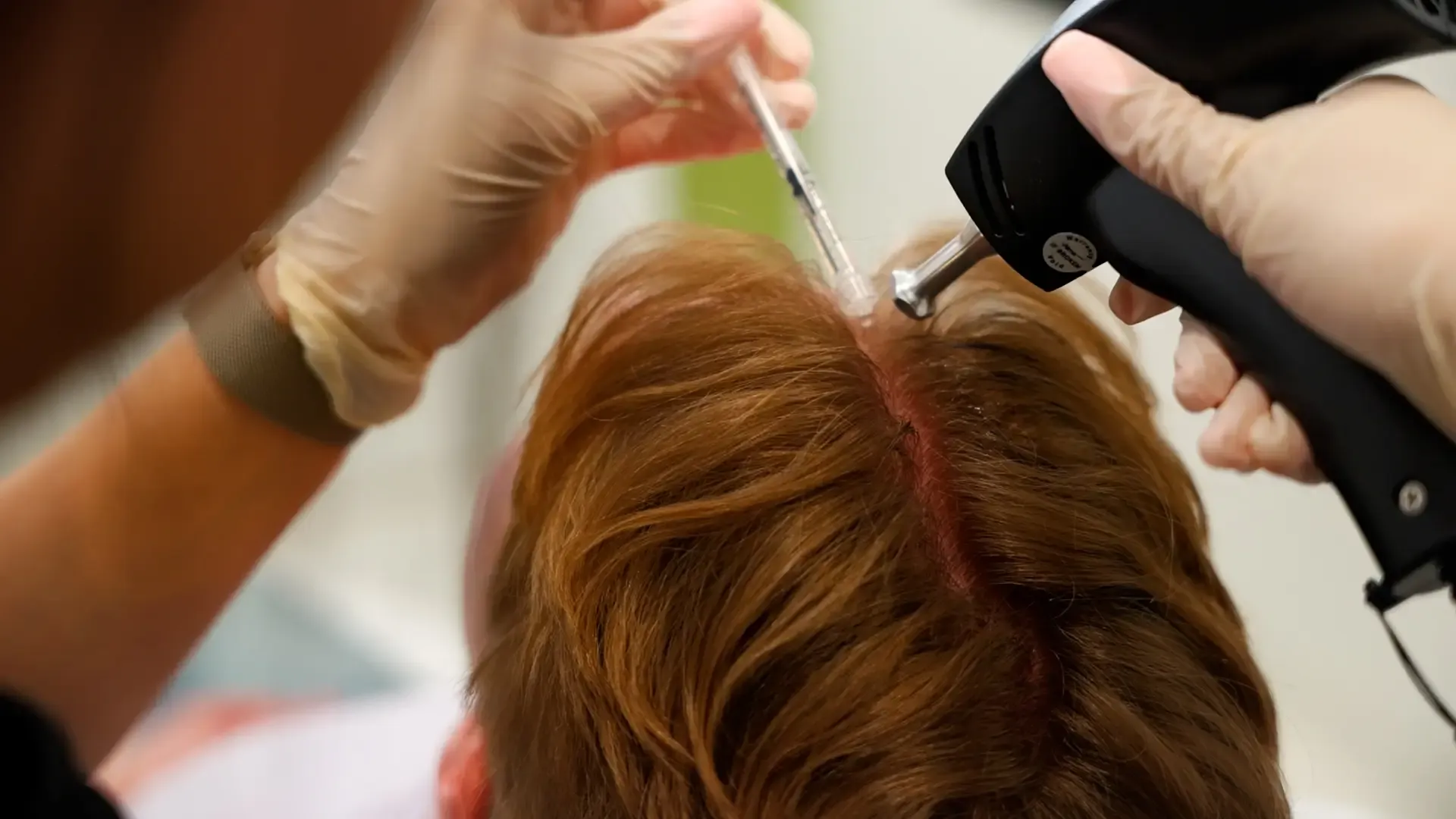
Table of Contents
- 1. So, Does Ozempic Actually Cause Hair Loss?
- 2. The Biology Behind GLP-1 Hair Shedding
- 3. The Month by Month Timeline (This Is the Part Most Articles Skip)
- 4. The Diagnosis That Catches Patients Off Guard
- 5. Bloodwork to Request Before the Shedding Starts
- 6. The Nutrition Problem Nobody Warns You About
- 7. When to Wait It Out, When to Add Clinical Support, When to Escalate
- 8. What Does Not Help
- 9. When to Book a Consultation
The short answer is yes, GLP-1 medications like Ozempic, Wegovy, Mounjaro, and Zepbound can cause noticeable hair shedding. But the longer, more useful answer is that the drug itself is not attacking your hair follicles. Your rapid weight loss is. The shedding has a specific name (telogen effluvium), a predictable timeline (peak loss around months three to four), a known set of triggers you can address, and an end date most patients miss because they panic before the regrowth phase shows up. This guide walks through the actual biology, the month-by-month timeline, the bloodwork worth requesting before the shedding starts, and the realistic treatment stack for both the wait-it-out scenario and the cases that need clinical support.
If you want the broader context first, our GLP-1 side effects guide covers the full picture of skin and aesthetic changes on these medications, and our hair loss types and causes guide explains how clinicians differentiate the four major categories of hair loss in general.
Quick note: Skinfluence does not prescribe GLP-1 medications. Talk to your physician about prescription decisions. What we address here is the hair shedding side of the equation.
So, Does Ozempic Actually Cause Hair Loss?
Technically, no. Practically, yes. Here is the distinction that matters. The clinical trial data for semaglutide (Ozempic, Wegovy) reported hair loss as a side effect in roughly 3 percent of patients on the higher 2.4 mg weekly dose in the STEP trials. That is meaningfully higher than the placebo arm. But the dermatology literature has been clear since the first wave of GLP-1 weight loss patients showed up in clinics: the drug is not acting on the follicle directly. The shedding is driven by how much weight you are losing and how fast you are losing it. The drug is the catalyst. The biology is metabolic. This matters because it tells you the fix. If GLP-1 medication were directly damaging your follicles, stopping the drug would be the only real option. Because the shedding is downstream of rapid weight loss and the metabolic stress that comes with it, the levers you can pull are different (and there are several of them).The Biology Behind GLP-1 Hair Shedding
Every hair follicle on your scalp cycles independently through three phases. About 85 to 90 percent of your follicles are in the active growth phase (anagen) at any given time, a small percentage is in the brief transition phase (catagen), and the rest are resting (telogen). Daily loss of 50 to 150 hairs is normal and reflects follicles cycling out of telogen. Telogen effluvium happens when a significant physiological stressor pushes a much larger percentage of follicles, typically 20 to 30 percent, prematurely into the resting phase. Those follicles sit dormant for two to three months, then release their hair shafts at roughly the same time. That is the wave of shedding you notice in the shower drain, in your hair tie, on your pillow. The stressors driving this in GLP-1 patients are well defined and they stack on top of each other:- The caloric deficit itself, especially during dose escalation when nausea and early satiety hit hardest.
- Protein insufficiency. When your appetite drops by 40 percent, hitting a 1.2 g per kg protein target becomes a project.
- Iron, zinc, vitamin D, and B12 inadequacy. The same appetite drop that limits protein limits everything else.
- The general physiological stress of rapid body composition change.
The Month by Month Timeline (This Is the Part Most Articles Skip)
Knowing the timeline keeps you from panicking at month four and quitting the medication unnecessarily. Here is the realistic pattern:Weeks 0 to 8: Nothing Visible
You start the medication. You titrate up. Your weight starts dropping. Your hair looks fine because the follicles that are about to be pushed into telogen have not even gotten the signal yet. Patients in this window often think they are out of the woods. They are not.Weeks 8 to 12: The Trigger Window
This is when the metabolic stress signal reaches the follicles. They start transitioning into the resting phase silently. You will not see anything yet, but the clock is now running.Weeks 12 to 16: The Shedding Peaks
This is when patients call. Their hair is coming out in handfuls in the shower. Their part looks wider. Their ponytail feels thinner. The shedding is typically diffuse across the entire scalp, not patchy or focal. The intensity peaks somewhere in this window and feels alarming.Weeks 16 to 24: Shedding Slows, Regrowth Has Started
The shedding rate tapers off. New hair has already started growing, but at a quarter inch per month it takes time before you can see it. This is the window where patients are most likely to abandon their regimen because they cannot see the recovery yet.Months 6 to 12: Visible Regrowth
The new hairs are now long enough to see. You will notice them at the part line and around the hairline as short, often slightly thinner shafts. These will mature.Month 12 and Beyond: Full Recovery
In the absence of an underlying genetic or scarring condition, hair density typically returns to baseline within 6 to 12 months of weight stabilization. The follicles were never destroyed. They were resting.The Diagnosis That Catches Patients Off Guard
Here is the scenario most articles miss, and it matters a lot: GLP-1 weight loss can unmask underlying androgenetic alopecia (pattern hair loss) that you would not have noticed otherwise. If you carry the genetics for pattern hair loss, your follicles have already been quietly miniaturizing for years. You may have lost 15 to 20 percent of density without noticing because the remaining hairs covered for it. When telogen effluvium hits and pulls out a chunk of the resting follicles all at once, two things happen at the same time: the temporary shedding from weight loss, and a sudden visual reveal of the long-term pattern loss that was already in progress. A trichoscopic exam (magnified scalp imaging) can differentiate these two. Pattern hair loss shows follicular miniaturization, hair shaft diameter variability, and yellow dots in specific scalp regions. Telogen effluvium shows empty follicular units distributed diffusely without miniaturization. The treatment plan is different for each, which is why the diagnosis matters. If your shedding does not resolve by month 9 to 12 after weight stabilization, or if regrowth comes in noticeably thinner than your baseline hair, this is the scenario your clinician should evaluate.Bloodwork to Request Before the Shedding Starts
If you are starting a GLP-1 and want to get ahead of the shedding rather than react to it, ask your physician for the following panel as a baseline:- Ferritin. The lab reference range starts around 30 ng/mL, but most hair-focused practitioners want it above 50. Ferritin below 30 is clearly associated with shedding.
- Vitamin D (25-OH). Target above 75 nmol/L for hair health.
- Zinc and B12. Both are commonly insufficient in patients with sharply reduced food intake.
- TSH and free T4. Thyroid dysfunction can pile on top of GLP-1 shedding and turn a temporary issue into a longer one.
- Complete blood count. Rules out anemia as a contributor.
- For women: DHEA-S, free testosterone, and prolactin if there is any clinical concern for an androgen driver.
The Nutrition Problem Nobody Warns You About
GLP-1 medications work by reducing appetite. That is the entire point. But it creates a real problem: your protein and micronutrient targets do not drop just because your appetite did. A 160 pound person needs roughly 87 grams of protein per day at the 1.2 g per kg target. On a normal appetite that is achievable without thinking about it. On 40 percent reduced food intake, it requires deliberate effort. A workable protocol most patients can sustain:- Front-load protein at breakfast. Three eggs plus Greek yogurt gets you to 35 grams before your appetite even kicks in.
- Liquid protein when solids feel impossible. A whey or collagen-blend shake delivers 25 to 30 grams in volume your stomach will tolerate.
- Smaller meals more often rather than three meals you cannot finish.
- Track for two weeks. Most patients dramatically overestimate their protein intake. A free app for 14 days corrects the picture.
When to Wait It Out, When to Add Clinical Support, When to Escalate
A simple decision tree:Wait it out if:
- Shedding started 2 to 4 months after beginning the medication.
- The pattern is diffuse across the whole scalp, not patchy.
- Your bloodwork is clean or has been corrected.
- You are hitting your protein target.
- You can ride out the visual change for the 6 to 12 month recovery window.
Add in-clinic supportive treatment if:
- The shedding is severe enough to be visibly thinning your hair and you do not want to wait passively.
- You want to shorten the recovery curve.
- You want to support scalp environment and follicular health during the vulnerable window.
Escalate to a dermatologist if:
- Shedding has not resolved by 9 to 12 months after your weight stabilized.
- The regrowth is noticeably thinner than your baseline hair.
- The loss is patchy, focal, or accompanied by scalp symptoms (pain, itch, burning, scaling).
- There is a strong family history of pattern hair loss and you want to start medical therapy (topical minoxidil, oral finasteride, low dose oral minoxidil) before significant miniaturization sets in.
What Does Not Help
A short list of things patients spend money on that the evidence does not support for GLP-1 hair shedding:- Biotin supplements (unless you have a documented deficiency, which is rare).
- Aggressive scalp scrubs and exfoliation, which can irritate already stressed follicles.
- Stopping the medication early before you have explored the addressable causes (nutrition, micronutrients, supportive treatment).
- Hair growth gummies marketed on social media, which are typically biotin plus filler at a high markup.